A Box Turtle Habitat includes the food, water, and shelter that box turtles need to survive including loose soil where they can burrow down underground as they brumate (hibernate) during the winter.
Turtles are reptiles (cold-blooded animals that are covered in bony plates and scales).
Alabama is home to 31species of turtles.
This is more species than any other state in the country!
This includes some that live mostly in water and some that live on land.
Generally, turtles are aquatic (live in water) and tortoises are terrestrial (live on land).
The box turtle is unique in that it is a turtle that primarily lives on land.
Eastern Box Turtle in Habitat Tyler Burgener
Eastern Box Turtles
Eastern box turtles can be found all over Alabama, but some areas have more than others.
There are also other types of box turtles found in Alabama – the three-toed box turtle and the Gulf Coast box turtle.
In Alabama, Eastern box turtles are protected.
Meaning you cannot collect them from the wild and keep them as pets
Eastern Box Turtle in Habitat Tyler Burgener
Box Turtle Adaptations
Adaptationsare those features that help an organism survive in a their habitat.
Box turtles have a number of adaptations, including these listed below.
Hinged Shell
Box turtles have a hinged plastron(bottom of shell)
Because of this, they have the ability to pull their limbs, tail, and head into their shell and close it tightly when they are in danger.
Many turtles have hinged shells, but box turtles are the only ones that can close theirs completely.
As the shell closes, air is released, creating a hissing sound.
Box Turtle with Shell Closed Project Noah – Neil Dazet
Burrowing
Box turtles are cold-blooded, meaning they cannot control their own body temperature and depend on outside heat sources like the sun or a warm rock to keep their bodies warm.
In summer months, they escape midday heat under leaves or soil by using their feet that are perfect for digging burrows.
During winter months they hibernatein a burrow as much as two feet down.
They can stay underground like this for months at a time.
While underground, the turtles are protected from predators, the weather, and forest fires.
Box Turtle Burrowed in Leaf Litter Tyler Burgener
Homing Instinct
Box turtles have a great homing instinct (can find their way home).
Home range is the area in which an animal lives its life from birth to death.
Box turtles feed, mate, and hibernate in their home range.
It is usually about the size of a football field.
Their homing instinct allows them to recognize important characteristics of their home range, like locations of food and water.
If they travel outside of their home range, they will try their hardest to find their way back home.
This is why it is important to help a turtle cross the road if necessary, and not to bring it home and release it where it is far from its home range.
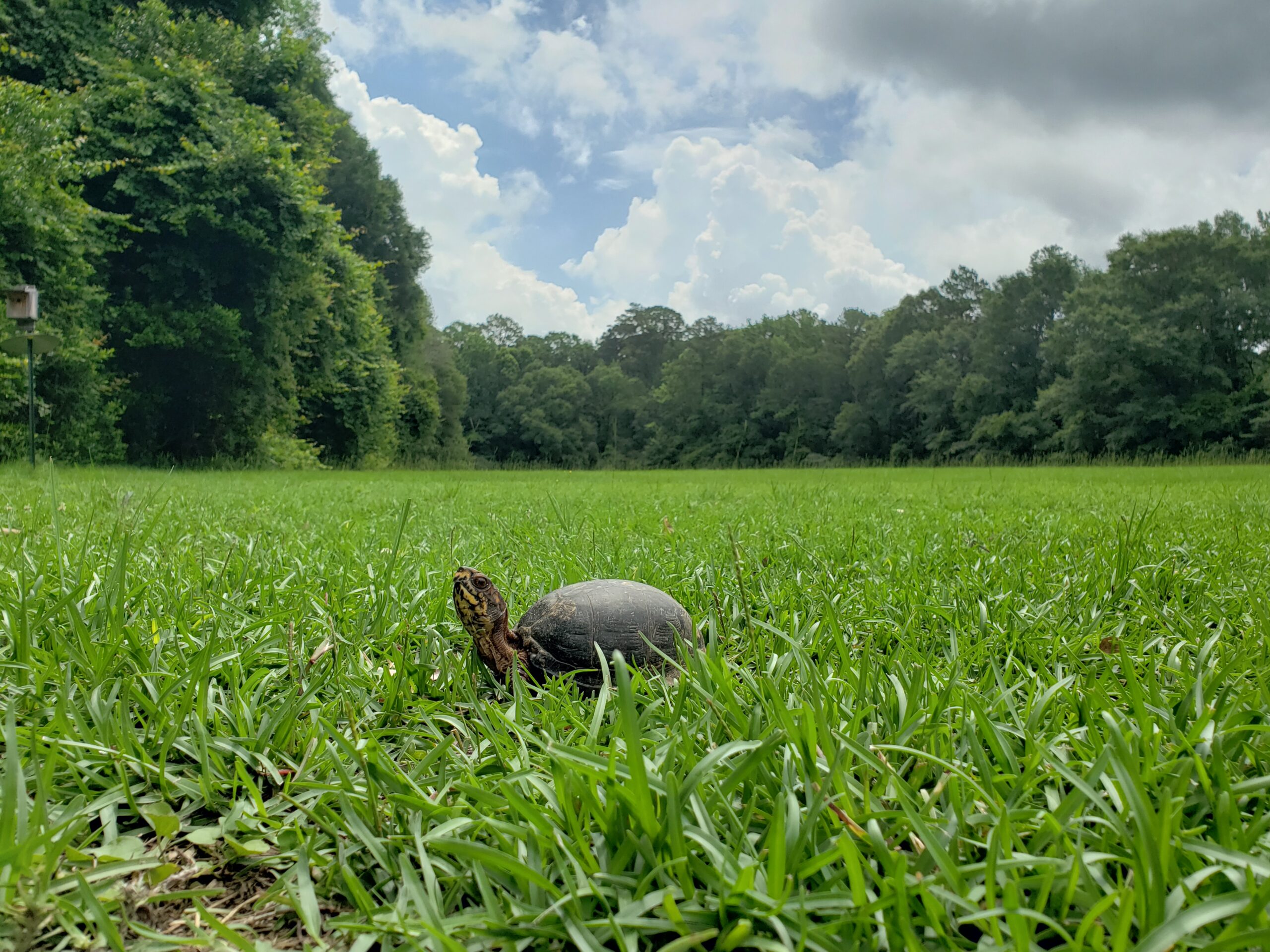
Box Turtle in Habitat Tyler Burgener
Habitat Needs
A box turtle habitat includes food, water, and shelter for box turtles.
Food
Box turtles are omnivores(eat both meat and vegetables).
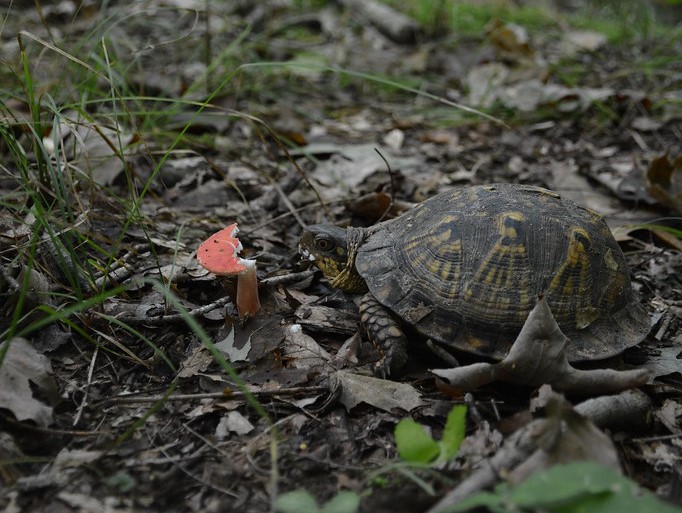
They eat mushrooms, worms, snails, bugs, berries, and plants like dandelions.
The plants, soil, water, and rocks or logs in a box turtle habitat also attract bugs and other invertebrates that turtles like to eat.
Adult box turtles eat more vegetation than babies, and babies eat more meats/ proteins than adults.
Box Turtle Eating Mushroom Flickr – Brad Carlson
Water
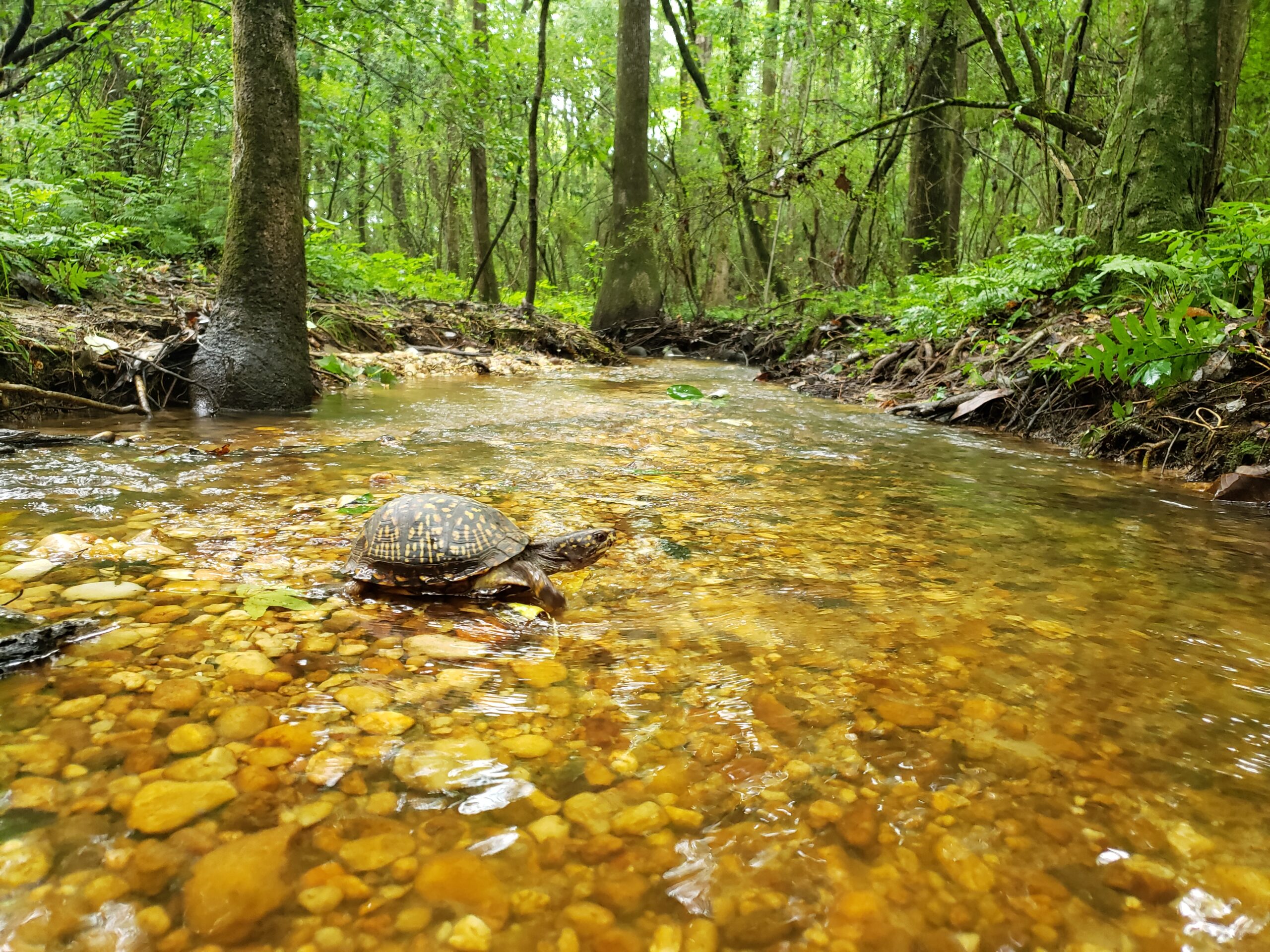
Box turtles get the water that they need by eating vegetation and fruits as well as drinking from ponds and puddles.
While they spend most of their lives on land, they do spend a lot of time in water – soaking, hunting, or drinking.
Box Turtle in Water Tyler Burgener
Shelter
Box turtles prefer moist, forested areas but will venture into pastures and fields.
Box turtles have excellent built-in protection from predators and other threats – their shells.
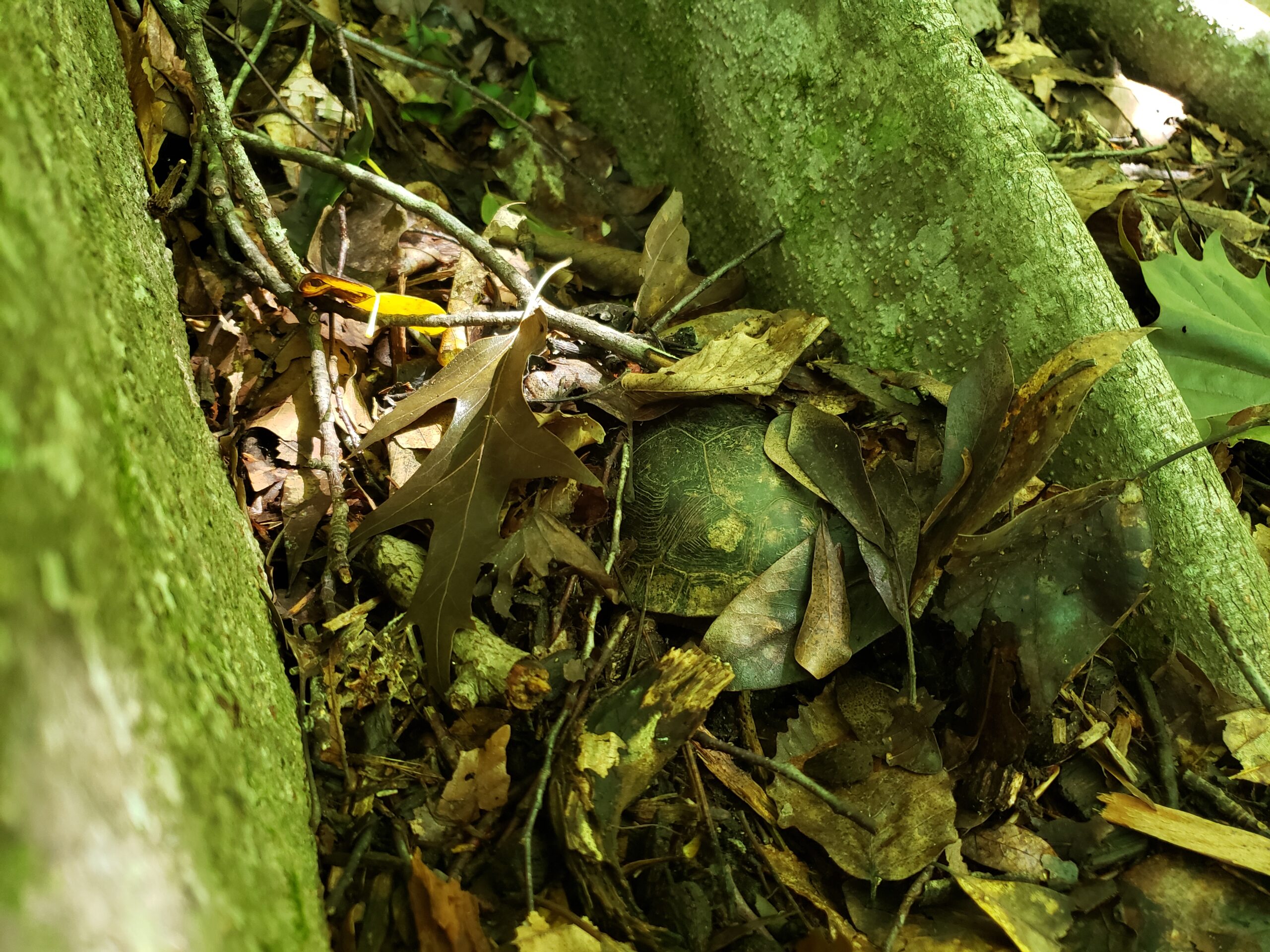
They also seek shelter under vegetation, logs, or rocks.
During colder seasons, box turtles escape the weather by burrowing underground.
Box Turtle Under Leaf Litter Tyler Burgener
Places to Raise Young
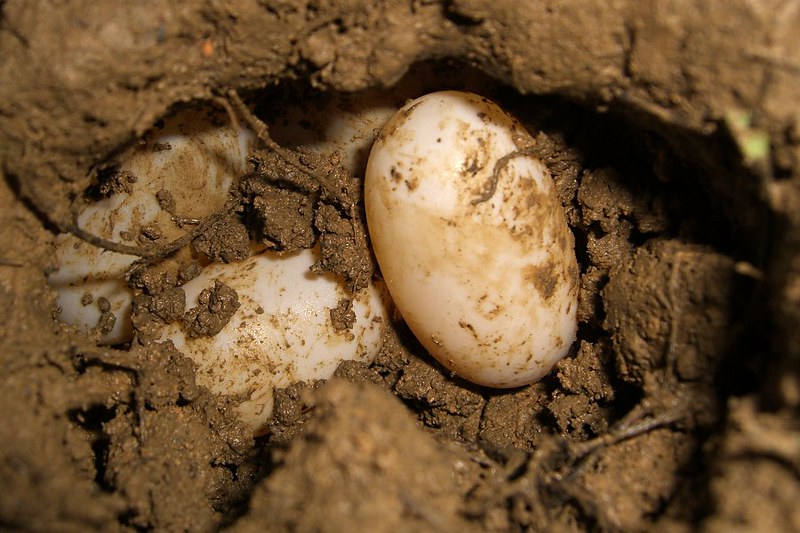
Female box turtles dig holes in loose, sandy soil and deposit their eggs.
They bury the eggs and leave them there to incubate over the next several weeks and hatch.
They do not provide any protection or care to the eggs or babies.
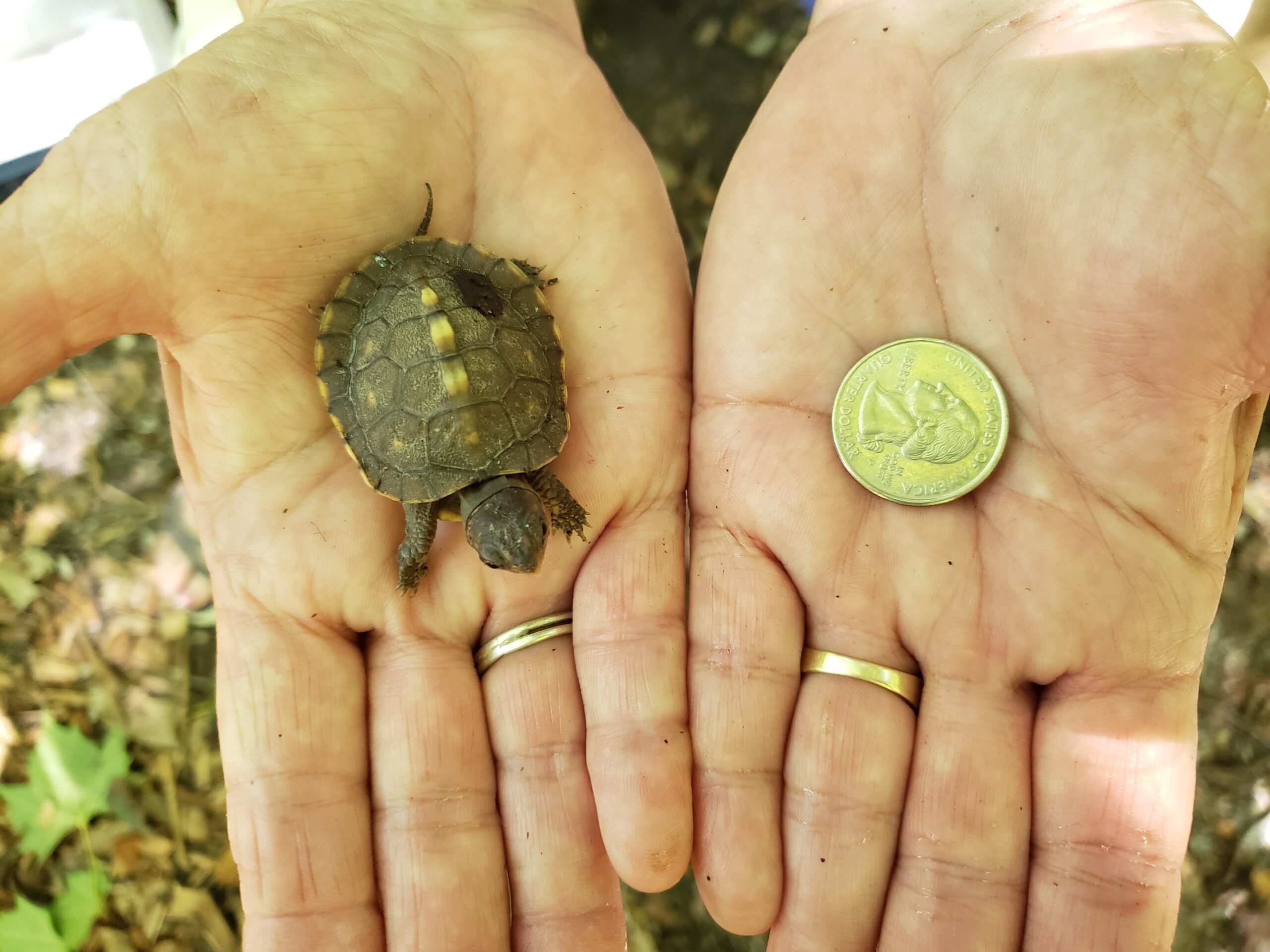
Baby Box Turtle Tyler Burgener
Interesting Facts
#1
Box turtles’ gender is determined while they are in the egg based on the temperature of the soil surrounding the egg.
If the eggs in the nest are warm (over 82 degrees Fahrenheit), the turtles are likely to be female.
If the eggs not as warm (around 80 degrees Fahrenheit or lower) the turtles are likely to be male.
#2
Box turtle eggs are thick and leathery.
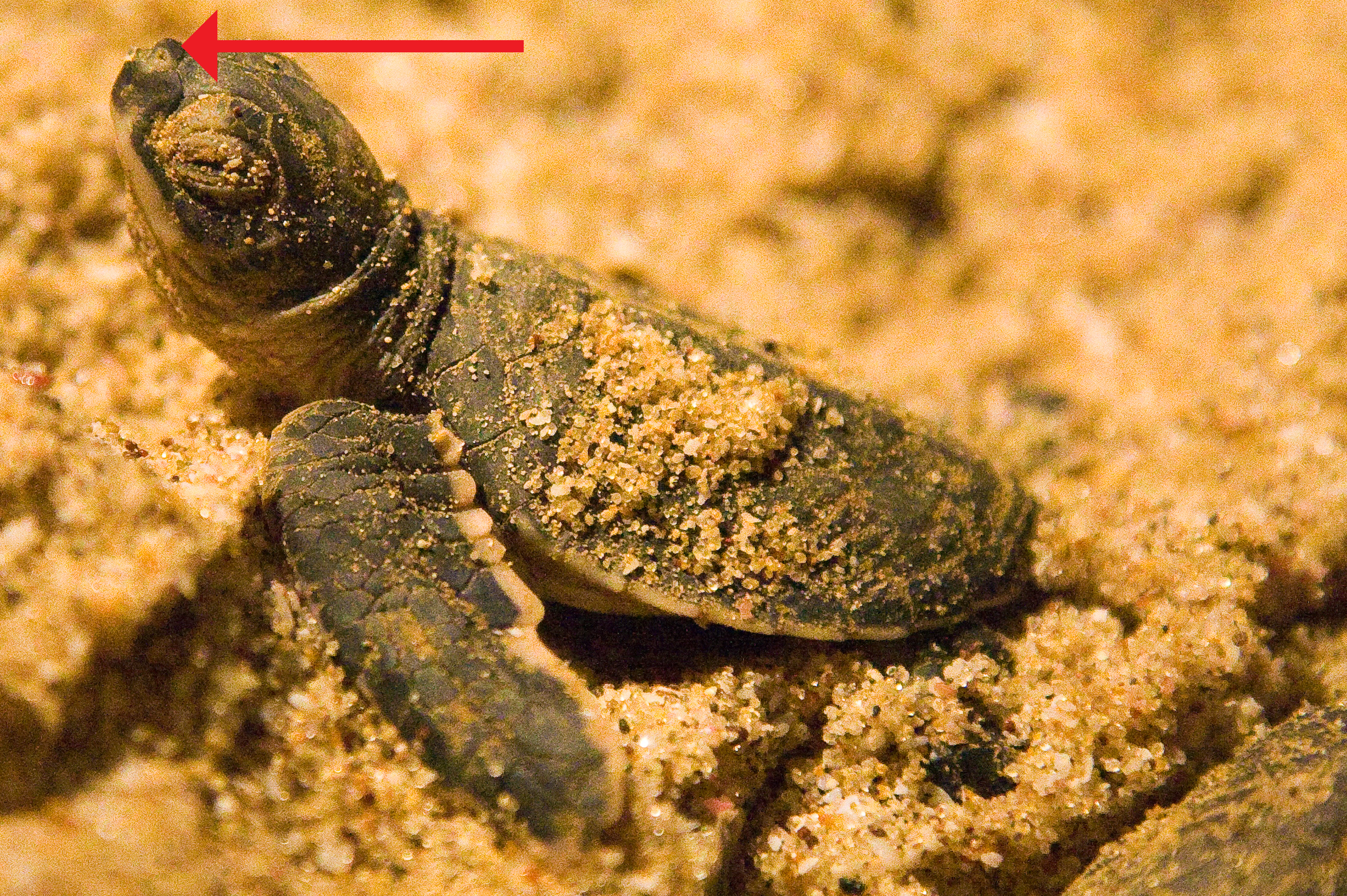
Because of this, they develop a temporary sharp, hard knob on the tip of their upper beak called an “egg tooth” while they are in the egg.
They use it to break out of their shell when they are ready to hatch.
A few days after hatching it falls off.
#3
Eastern box turtles can live to be 30 years old quite regularly, but can sometimes even reach 50 years of age!
Turtle Egg Tooth (on sea turtle) Flickr – Jason Hollinger